


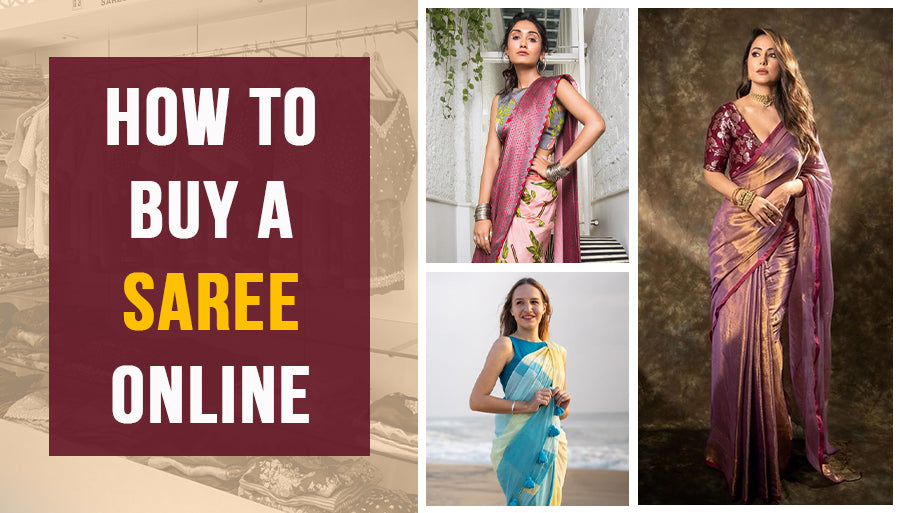
Start by Falling in Love with the Story
 Every saree invariably comes with a story. The Banarasi weaves carry the whispers of Varanasi’s ghats, while a Kanjivaram saree hums the tunes of Tamil Nadu’s temples. Before clicking the “add to cart” option, take a moment to explore the stories weaved in sarees. Does the earthen and raw simplicity of handloom cotton sarees attract you, or do you prefer the exotic handwoven design of a zari-worked Banarasi? When you have a specific genre of saree in your mind, picking your favorite becomes easier.
You also need to choose sarees based on the occasion or time of the day. For example, the dense texture of the Tussar silk saree and its light golden color can fit daytime weddings or occasions. In contrast, for an evening reception or party with many sparkling lights, you can choose a georgette saree with rich embroidery work.
Every saree invariably comes with a story. The Banarasi weaves carry the whispers of Varanasi’s ghats, while a Kanjivaram saree hums the tunes of Tamil Nadu’s temples. Before clicking the “add to cart” option, take a moment to explore the stories weaved in sarees. Does the earthen and raw simplicity of handloom cotton sarees attract you, or do you prefer the exotic handwoven design of a zari-worked Banarasi? When you have a specific genre of saree in your mind, picking your favorite becomes easier.
You also need to choose sarees based on the occasion or time of the day. For example, the dense texture of the Tussar silk saree and its light golden color can fit daytime weddings or occasions. In contrast, for an evening reception or party with many sparkling lights, you can choose a georgette saree with rich embroidery work.
Measure Twice Before Buying a Saree
 Here’s where many stumble. Sarees aren’t one-size-fits-all, and neither are blouses. A common pitfall is forgetting to check the length of the blouse piece or assuming the petticoat will fit. To buy the perfect fitting saree, you must also take body measurements. You can use tape to measure the bust, waist, and hips. Remember, when you buy from reputed sellers, you will likely come across size charts. You must be particularly watchful about blouses as they require precise measurements.
The standard saree length for most varieties starts from 5.5 and goes up to 9 yards. If you are just starting to wear a saree, opt for a shorter 6-yard saree since it’s easier to drape. As you
master draping a saree of any length nicely, you can go for longer traditional varieties. Check the product description for these details. If the saree is unstitched, ensure there’s enough fabric for pleating and the pallu. Nothing’s worse than realizing halfway through draping that you’re short by a yard.
Here’s where many stumble. Sarees aren’t one-size-fits-all, and neither are blouses. A common pitfall is forgetting to check the length of the blouse piece or assuming the petticoat will fit. To buy the perfect fitting saree, you must also take body measurements. You can use tape to measure the bust, waist, and hips. Remember, when you buy from reputed sellers, you will likely come across size charts. You must be particularly watchful about blouses as they require precise measurements.
The standard saree length for most varieties starts from 5.5 and goes up to 9 yards. If you are just starting to wear a saree, opt for a shorter 6-yard saree since it’s easier to drape. As you
master draping a saree of any length nicely, you can go for longer traditional varieties. Check the product description for these details. If the saree is unstitched, ensure there’s enough fabric for pleating and the pallu. Nothing’s worse than realizing halfway through draping that you’re short by a yard.
Dress for the Occasion saree
 Imagine wearing a heavy brocade saree to a beach wedding. You’d feel out of place. The occasion dictates the saree’s fabric, color, and embellishments. A cotton or linen saree in pastel shades works beautifully for casual gatherings, while a silk or organza number with intricate embroidery elevates festive events.
Consider subtle prints or solid colors in manageable fabrics like chiffon or crepe for workplace settings. They’re easy to carry and project professionalism. If you’re shopping for a wedding, lean toward rich silks or velvets with gold or silver accents. But don’t be afraid to break norms. A vibrant hand-painted saree could be your statement piece at a cultural event.
Imagine wearing a heavy brocade saree to a beach wedding. You’d feel out of place. The occasion dictates the saree’s fabric, color, and embellishments. A cotton or linen saree in pastel shades works beautifully for casual gatherings, while a silk or organza number with intricate embroidery elevates festive events.
Consider subtle prints or solid colors in manageable fabrics like chiffon or crepe for workplace settings. They’re easy to carry and project professionalism. If you’re shopping for a wedding, lean toward rich silks or velvets with gold or silver accents. But don’t be afraid to break norms. A vibrant hand-painted saree could be your statement piece at a cultural event.
Always Verify the Seller
 The internet is a bustling marketplace, but not all stores are created equal regarding integrity and transparency. First, do some online research about the seller’s reputation. Check the customer reviews and testimonials posted on their website and numerous third-party platforms. Remember, if the seller is authentic, he will showcase the product with high quality photos and videos that capture the product from all angles. You can also look for live video demonstrations that some stores offer. Some exotic saree boutiques prioritize individual demonstrations of their unique saree collections.
Return policies are your safety net. Reputable sellers provide hassle-free returns or exchanges, understanding that colors might look different on screens. Be wary of sites that don’t offer clear contact information or hide behind generic email addresses. A quick Google search with the brand name and “reviews” can save you from disappointment.
The internet is a bustling marketplace, but not all stores are created equal regarding integrity and transparency. First, do some online research about the seller’s reputation. Check the customer reviews and testimonials posted on their website and numerous third-party platforms. Remember, if the seller is authentic, he will showcase the product with high quality photos and videos that capture the product from all angles. You can also look for live video demonstrations that some stores offer. Some exotic saree boutiques prioritize individual demonstrations of their unique saree collections.
Return policies are your safety net. Reputable sellers provide hassle-free returns or exchanges, understanding that colors might look different on screens. Be wary of sites that don’t offer clear contact information or hide behind generic email addresses. A quick Google search with the brand name and “reviews” can save you from disappointment.
Go for Easy-to-Care Fabric saree
 Remember, each fabric has its feel and personality: silk, cotton, georgette, linen, chiffon, velvet, tussar, net, brocade. While silk exudes luxury, it demands dry cleaning. Cotton is forgiving and breathable but might wrinkle easily. Georgette flows like a dream but requires gentle handling. Before deciding to purchase, think a little about the maintenance and upkeep of the saree fabric. Some fabrics require heavy maintenance and care while some allow casual upkeeping.
Always read the care instructions before checking out. If the handloom saree you are buying needs special storage, consider whether it's feasible for you. If eco-friendliness is a concern, opt
for a saree made with organic material. Many artisans these days use natural dyes, which are not only kinder to the environment but also better for your skin.
Remember, each fabric has its feel and personality: silk, cotton, georgette, linen, chiffon, velvet, tussar, net, brocade. While silk exudes luxury, it demands dry cleaning. Cotton is forgiving and breathable but might wrinkle easily. Georgette flows like a dream but requires gentle handling. Before deciding to purchase, think a little about the maintenance and upkeep of the saree fabric. Some fabrics require heavy maintenance and care while some allow casual upkeeping.
Always read the care instructions before checking out. If the handloom saree you are buying needs special storage, consider whether it's feasible for you. If eco-friendliness is a concern, opt
for a saree made with organic material. Many artisans these days use natural dyes, which are not only kinder to the environment but also better for your skin.


